


Between Sound, Code, and Resistance: My Journey in Music and Technology
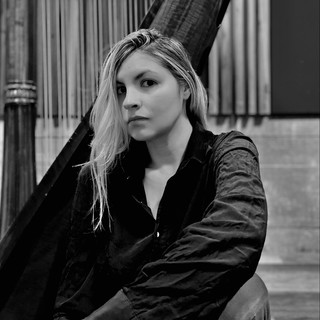

It is the beginning of the year. January 5th. The first Monday.
In this suspended moment between what has passed and what is yet to come, I found myself reflecting on my entire trajectory — and, above all, on the self I have been constructing along the way. I now understand my education as an indissociable tripartite of music, technology, and research: not as parallel domains, but as dimensions that mutually nourish one another and form a single whole — a shared space of inquiry, creation, and positioning in the world.
My contact with computers began very early. Still in childhood, around the age of four, I was already engaging with Windows 95. In 1998, I had my first encounter with HTML, an experience that sparked a deep curiosity about the inner workings of technology and the logic behind interfaces. At the age of ten, I began my musical studies, and composition was already present as a space of invention and expression — although, at that time, I did not yet recognize it as a viable professional path.
Perhaps because I am a woman — and due to the near-total absence of female representation in musical and technological creation — the idea of becoming a composer simply did not present itself as a possible destiny. The horizon offered to me felt narrow, often confined to the field of education, as if invention, authorship, and experimentation were not legitimate spaces for me to occupy. It was only when I understood that I could be as inventive as any composer that I truly found myself in composition.
This realization naturally connected with something that had always accompanied me: a constant desire to remain in contact with what is new — with what emerges, transforms, and redefines practices. In this way, my interest in technology — present since childhood — became organically integrated into music, not as an auxiliary tool, but as a constitutive element of my creative and analytical thinking.
During my undergraduate studies in Music, I deepened my interest in contemporary composition, electroacoustic music, and music technology. During this period, I participated in the group Vozes Inaudiáveis, a collective dedicated to the visibility of women composers and to critical reflection on authorship, invisibility, and power relations in music. This experience was decisive for my ethical, aesthetic, and political formation.
I was also a co-founder of CLAP — the Free Collective for Art and Programming, an attempt to create a genuinely collaborative space between art and technology. The group eventually dissolved in the post-pandemic period, revealing something I continue to observe with frequency: collective work remains rare in music, particularly in the field of composition. Stereotypes inherited from the nineteenth century persist almost intact — the figure of the isolated, individualistic, and often masculinized genius — making collaborative, horizontal, and critical practices difficult to sustain.
From my perspective, this same logic contributed to my brief experience at Studio PANaroma. Environments that place little value on collaboration and critical contestation tend to exclude voices that question crystallized structures. Still, when these attempts at insertion did not materialize as expected, they never turned into abandonment. The creative impulse that drives me — what I recognize as my inventive potential — does not settle for hopelessness. On the contrary, it reorganizes itself, persists, and seeks new ways of existing.
It was also along this path that I came to perceive, with particular intensity, that being a woman in electroacoustic music and technology, especially in the Brazilian context, still means occupying a space of exception. The absence of female references is not merely statistical; it directly shapes how we imagine ourselves professionally. For this reason, my work also assumes a political commitment: to make women’s presence in musical and technological creation visible, affirming that this path is possible.
At the same time, I acknowledge that my trajectory has been marked by ongoing processes of sabotage, many of them normalized, which I believe began in childhood. Lowered expectations, invalidation of choices, systematic discouragement, interruptions, and subtle forms of silencing — not always explicit, but persistent — were part of this path. These obstacles are not a matter of individual incapacity, but the result of structures that historically operate to limit women’s autonomy, ambition, and permanence in technical, authorial, and symbolically powerful fields.
Currently, in my master’s program, I am developing research that brings together improvisation, technology, and musical analysis, understanding music not merely as technique or aesthetic object, but as social practice. Improvisation, in particular, appears to me as a metaphor for collective life: attentive listening, continuous adaptation, responsiveness to others, and the construction of meaning in real time.
Being enrolled in the master’s program at UNESP represents, for me, both an achievement and an act of resistance. Despite the institution housing one of the most important electroacoustic music studios in the country, it has become evident that projects focused on AI and improvisation research are often perceived as disconnected from musical composition or from the aesthetics traditionally associated with the studio. I see this position as a setback for the advancement of research in music and technology, especially at a moment when such intersections are already central to international debate.
Even so, not everything is lost in this landscape. There remain professors and researchers committed to expanding the field, attentive to contemporary transformations, and willing to support investigations that challenge disciplinary boundaries. It is within this space — between institutional friction and critical openness — that I continue to develop my work, reaffirming improvisation, technology, and research as inseparable dimensions of compositional practice.
Alongside my musical research, I began a degree in Computer Science, driven by the need to understand the systems that shape contemporary cultural production. I have been studying programming fundamentals, backend development, DevOps, and Artificial Intelligence, seeking to integrate this knowledge into music in a critical and creative way.
From this intersection emerged projects such as Sonata Analyzer, focused on automatic musical analysis from MIDI files, and Therapy Blues, an application designed for improvisational and therapeutic musical practices. In both cases, technology does not appear as a substitute for human creation, but as a tool for expanding listening, analysis, and musical experience.
My interest in AI applied to music is deeply connected to this perspective: I believe in systems that dialogue with the human, that respect cultural, historical, and social contexts, and that do not erase authorship, diversity, or subjectivity.
Today, my trajectory is built precisely within this in-between space:
between sound and code
between art and engineering
between research, creation, and resistance.
This blog is born as a space to share this path — with its questions, experiments, and uncertainties — and, above all, to affirm that it is possible to engage with technology without giving up music, ethics, and identity.


Comments